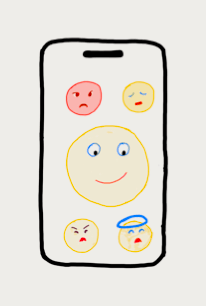
Technology was supposed to make things easier for us. It was also supposed to save us time so that we would have time to pursue our hobbies, travel to see places and spend time with our friends and family. However, things have not turned out exactly that way. And we have become ever so dependent on technology because there are apps for everything that we want to do to – book a cab, to shop, to order your dinner, to invest and even to do yoga or meditate. When our lives become so intertwined with technology, we forget that it is only a tool to help us get on with our lives.
The most intrusive of all technologies is the probably the mobile phone and its extension – the smartwatch. We instinctively turn to it when we hear a notification or see the screen briefly light up. Our desire to fill up all our waking time with something stimulating including multi-tasking has reached extreme proportions. We pull out our mobile phones and tablets when we want to keep ourselves occupied on a journey or when we are bored or not falling asleep quickly when we go to bed. I am sure you have noticed people looking at their mobile phone screens when they are cycling driving, walking and even when crossing the street, risking personal safety.
An article on cell phone addiction indicates that an average American spends over 5 hours a day on a mobile device – that’s 83 days in a year and picks up the phone over 186 times a day. All this comes at a cost – particularly for kids and teenagers. Governments across the world looking to protect them by limiting access to content that is harmful or restricting usage during school hours.
What is it that we can do to protect ourselves from becoming slaves to technology? How can we bring more calm and focus in one lives? The first step is to audit how much time you are spending on screens across all the devices that you use. Which are the non-essential apps that you spend most of your time on? The mobile phones already have tools that can provide you this information.
The next step is to enable notifications for apps and events that matter (these could be your appointments, task reminders, messages from immediate family or your manager) and disable notifications for non-critical matters such as games, social media and shopping apps. Consider using the Focus/ Do Not Disturb modes on your phone when you want a bit of calm.
The third step is to make it a little difficult for yourself by logging out of applications on mobile devices so that you have to log in again or access them more often via a browser on the computer. Remember to keep the phone a little distance away when you are at the dinner table or relaxing at home.
The fourth thing that you can do is check your emails and social media accounts only at specific times in a day. Ideally, invest in making social connections where you can meet people in-person rather than online over chats, online calls or social media. Whenever you are bored and itching to use the phone, consider reading a book or a magazine or a newspaper or doing a 4-7-8 long exhale breathing technique to calm yourself down: Inhale through your nose for 4 counts, hold your breath for 7 counts and exhale through your mouth for 8 counts. Or consider a short meditation or a mindfulness activity such as sensory grounding (credited to Betty Alice Erickson, a psychotherapist): Sit down comfortably and count 5 things that you can see, 4 objects around you that you can touch, 3 things that you can hear, 2 things that you can smell and one thing that you can taste. While there are apps for such activities as well, learn the techniques well so that you can also do them on your own.
Lastly, avoid using computers and mobile phones in the hour before you go to bed. By doing these things, you will be able to reduce the constant sensory and cognitive overload in your lives and find the calm that you deserve at the end of the day.
 Yogalaya Singapore